New iPad mini has big limitation on all but one model
Apple's redesigned iPad mini starts at $699 with a binned A20 Pro chip, reserving the full six-core CPU and Dual 16-core Neural Engine for the $999 512GB model.
By Dillip Chowdary • Oct 26, 2026 • Source: 9to5Mac
At a glance
- Display
- OLED, thinner housing
- Starting price
- $699 for the 128GB model
- 512GB price
- $999 for the 512GB model
- CPU cores
- 5 on 128GB/256GB; 6 on 512GB
- Refresh rate
- 60Hz on all models
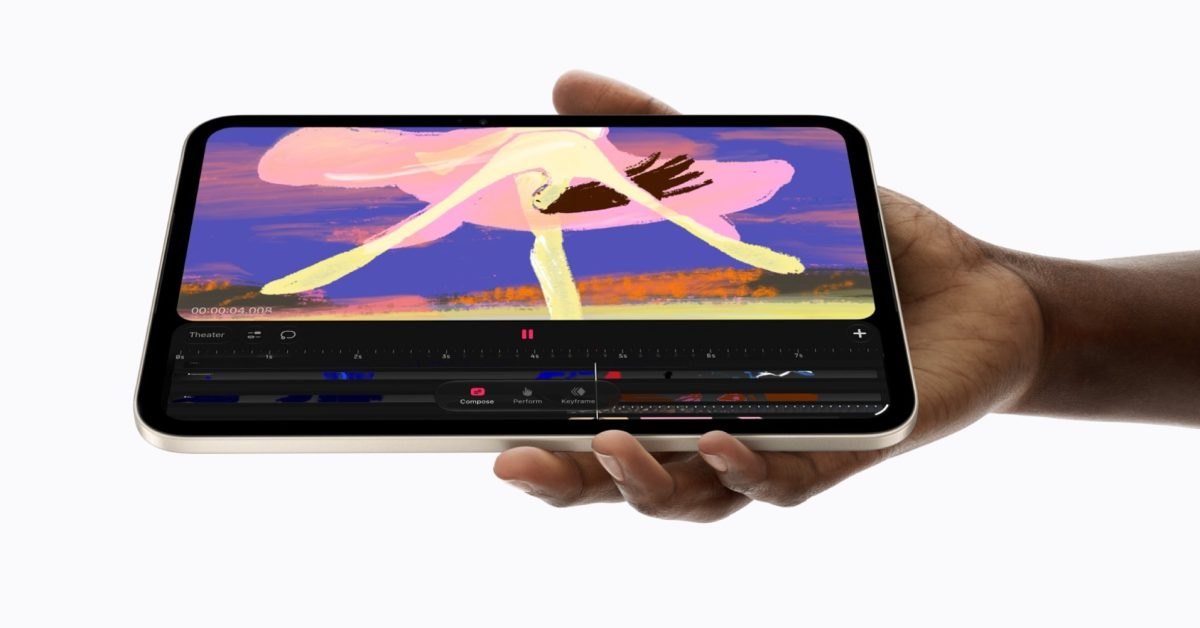
Apple unveiled its redesigned iPad mini featuring an OLED display, a thinner chassis, and an A20 Pro processor, but official technical specifications reveal significant silicon binning across the new lineup. According to 9to5Mac's report, every configuration except the highest storage tier receives a less capable version of the chipset. Rather than providing identical computing performance across the entire family, Apple restricted the uncompromised processor architecture to the most expensive tier, altering hardware expectations for prospective compact tablet purchasers.
This report details the architectural differences separating the standard storage tiers from the top model, examining processor core counts, machine learning hardware allocations, and pricing structures published by Apple. It is intended for prospective tablet buyers, software developers, and technical evaluators who need to understand how tier selections impact real hardware capabilities. Readers will learn which components Apple omitted from base models, how storage choices govern artificial intelligence acceleration, and what the financial cost of securing unbinned silicon means for buyers.
01What actually changed
The physical refresh introduces an OLED display, a thinner housing, and a larger screen alongside the A20 Pro processor. However, Apple published technical specifications confirming that silicon capabilities differ across storage capacities rather than remaining uniform.
Customers choosing the 128GB or 256GB storage options receive an A20 Pro variant with reduced computational hardware compared to the flagship model. Only purchasers who select the top 512GB storage capacity receive the complete, unbinned iteration of the A20 Pro silicon architecture.
Silicon binning is a familiar manufacturing practice in consumer electronics, but Apple expanded its scope beyond typical hardware adjustments for this release. In most previous implementations, binning simply meant disabling a single central processor core or graphics core to improve fabrication yields.
On the latest tablet, Apple altered general computing cores and dedicated machine learning hardware simultaneously. The lower storage editions lose an efficiency processor core while also forfeiting a secondary neural processing engine, creating a multi-tiered silicon hierarchy tied directly to internal storage.
02How it works
Apple's published specifications detail exact hardware differences across storage options. On the 128GB and 256GB configurations, the binned A20 Pro features a five-core central processor combining two super cores with three efficiency cores.
Graphical tasks run on a seven-core graphics processor equipped with hardware-accelerated ray tracing and dedicated neural accelerators. However, the machine learning subsystem on the 128GB and 256GB models consists solely of a single sixteen-core neural engine, restricting parallel artificial intelligence processing capacity compared to the higher storage option.
Upgrading to the 512GB storage model restores the complete silicon layout of the A20 Pro processor. The top-tier version includes a six-core central processor with two super cores and four efficiency cores, adding back the missing efficiency core.
While the seven-core graphics processor, hardware-accelerated ray tracing, and neural accelerators remain identical, artificial intelligence hardware expands significantly. The 512GB tier integrates a dual sixteen-core neural engine, effectively doubling the physical matrix processing units available for local machine learning workflows.
Advertisement
Tech Pulse Daily
Get tomorrow's pulse first
Join engineers who read Tech Pulse before stand-up. Free, weekday mornings.
03Why it matters now
The silicon disparity arrives alongside a higher starting price point for Apple's compact tablet category. The base 128GB model starts at $699, demanding a record financial investment for entry-level hardware that includes a binned processor.
Consumers spending nearly seven hundred dollars might expect uniform processing capabilities across the product family, but standard configurations omit both general computing throughput and advanced machine learning hardware. This strategy increases the entry cost while delivering silicon that is intentionally constrained relative to the premium tier.
Purchasers seeking the uncompromised A20 Pro chip with six central processing cores and the dual sixteen-core neural engine must spend $999 for the 512GB model. Additional options such as cellular connectivity or nano-texture glass increase the total cost beyond that figure.
Meanwhile, community feedback notes that all models remain limited to a 60Hz display refresh rate despite the OLED upgrade and higher prices. Buyers face substantial price hikes to secure unbinned silicon on a compact display.
04Who is affected
The silicon distinction affects the majority of purchasers because the 128GB and 256GB models represent standard consumer volume. Everyday users seeking a compact device for reading, media consumption, and general tablet duties will receive the binned five-core processor.
Missing the fourth efficiency core reduces capacity for lightweight multitasking and background system operations. While typical interface interactions remain fast, workloads requiring sustained simultaneous task handling will encounter compute constraints earlier than they would on the unrestricted six-core model.
The reduction in neural engine hardware creates noticeable friction for developers, creative professionals, and power users deploying local machine learning tools. Software relying on heavy computer vision calculations, real-time photographic rendering, and local language modeling demands robust neural acceleration.
Applications compiled to utilize parallel matrix processing will run on a single sixteen-core neural engine rather than the dual-engine layout found in the 512GB model. Power users requiring maximum performance in a small form factor must purchase the most expensive tier.
05What to watch
Independent benchmark testing and thermal evaluations will reveal the practical performance gap between the five-core and six-core configurations under prolonged usage. Technical reviews will measure whether losing one efficiency core measurably degrades battery performance, heat dissipation, or background process retention during intensive tasks.
Evaluators will also test whether the single sixteen-core neural engine introduces latency in machine learning operations compared to the dual-engine setup. Initial laboratory measurements will demonstrate whether average users encounter performance differences during daily tablet operation.
Consumer response will indicate whether buyers accept higher base pricing paired with binned silicon or delay upgrading. Market analysts will watch whether high-end users migrate to the $999 512GB model or choose refurbished models, where Apple offers previous-generation hardware with discounts up to fifteen percent. Long-term sales tracking will show if the combination of a $699 starting price, 60Hz display limitation, and binned A20 Pro silicon dampens overall enthusiasm for the refreshed compact tablet line.
Frequently asked questions
Which new iPad mini models have the binned A20 Pro chip?
The 128GB and 256GB storage configurations include the binned A20 Pro chip with a 5-core CPU and a single 16-core Neural Engine. Only the 512GB model features the fully enabled 6-core CPU and Dual 16-core Neural Engine.
How much does the new iPad mini cost?
The new iPad mini starts at $699 for base storage configurations. Securing the fully unbinned A20 Pro processor requires the 512GB model, which costs $999 or more depending on cellular and nano-texture glass options.
What is the difference between the CPU cores on the different models?
Models with 128GB and 256GB storage feature a 5-core CPU consisting of 2 super cores and 3 efficiency cores. The 512GB model includes a 6-core CPU equipped with 2 super cores and 4 efficiency cores.
Does the new iPad mini display support high refresh rates?
All models of the new iPad mini remain limited to a 60Hz display refresh rate, even with the switch to an OLED panel.
Sources

Author
Dillip Chowdary
Writes Tech Bytes coverage of AI, engineering, and the tools that actually ship. Editor of Tech Pulse Daily.
Related on Tech Bytes
Advertisement