Don't Sleep on Single-Agent Systems news update
OpenHands demonstrated that single generalist coding agents using unified toolsets and Claude or Llama models can outperform complex multi-agent architectures.
By Dillip Chowdary • Oct 25, 2026 • Source: openhands.dev
At a glance
- Publisher
- OpenHands, open-source dev agent framework
- Core components
- Foundation model, system prompt, action space
- Agent design
- CodeActAgent, one model and one shared action space
- Context window
- Claude 200,000 tokens; Llama-3.1 128,000 tokens
- Handoff failure
- Verifier lacks Fault Localizer's tools
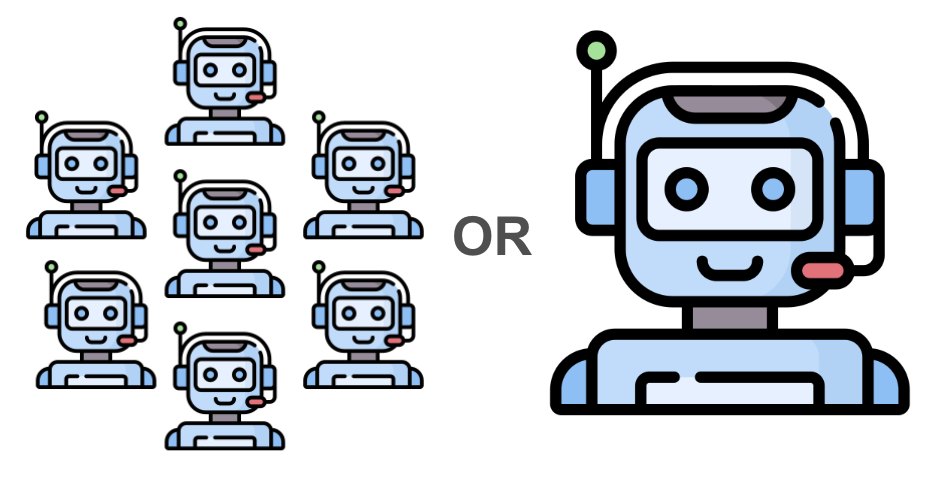
OpenHands, an open-source software development agent framework, published a technical case challenging the widespread push toward multi-agent systems, arguing that developers should prioritize generalist single-agent architectures instead. According to openhands.dev's report, while frameworks like MetaGPT and Autogen popularize splitting tasks across specialized sub-agents, practical software development shows consolidating capabilities into one strong agent yields superior reliability. The analysis draws on lessons learned while designing CodeActAgent in OpenHands, evaluating multi-agent coordination patterns against single-agent setups operating over unified tool sets.
This analysis examines the essential components of language model agents, contrasting multi-agent division of labor with unified runtimes across prompts, toolsets, and model context. It investigates why multi-agent setups suffer from structural rigidity, context loss during handoffs, and codebase maintenance bloat.
The breakdown is intended for software engineers, AI researchers, and engineering leaders evaluating whether to orchestrate specialized swarms or deploy unified execution models. Readers will understand how modern frontier models combine with consolidated action spaces to solve complex coding tasks without coordination overhead.
01What actually changed
The prevailing consensus across AI research and hackathons has favored multi-agent architectures, popularized by frameworks like MetaGPT and Autogen that divide tasks across discrete personas. OpenHands challenged this assumption by arguing that recent improvements in foundational models make multi-agent orchestration largely unnecessary for software engineering.
Every modern language model agent relies on three core components: the underlying foundation model, the system and environment prompt, and the action space defining interactive tools. While multi-agent systems alter these components across isolated instances, single-agent architectures maintain a single model, prompt, and toolset.
Its Manager outputs task plans, while the Reproducer runs tests to generate a reproduce.py script. A Fault Localizer isolates problematic files, an Editor modifies code, and a Verifier returns a binary resolution decision. Although dividing tasks into departmental roles mimics human organizations, setting rigid boundaries between tools introduces severe operational friction across the development lifecycle.
Its Manager outputs task plans, while the Reproducer runs tests to generate a reproduce.py script. A Fault Localizer isolates problematic files, an Editor modifies code, and a Verifier returns a binary resolution decision. Although dividing tasks into departmental roles mimics human organizations, setting rigid boundaries between tools introduces severe operational friction across the development lifecycle.
02How it works
OpenHands demonstrates single-agent execution through its CodeActAgent, combining a single generalist model, a unified action space, and a consolidated prompting technique. Frontier proprietary models like Claude and GPT-4o, alongside open-weight options like Llama-3.1 and Qwen-2.5, demonstrate broad technical capabilities.
When a model lacks specific skills, teams can continually train the weights without degrading other capabilities. Rather than restricting tools to separate agents, CodeActAgent pools capabilities into a shared action space that enables writing code, executing code, and browsing the web, subsuming the actions of multi-agent setups.
Modern architectures support this approach effectively, with Claude supporting 200,000 tokens and Llama-3.1 handling 128,000 tokens. Although longer prompts increase inference costs, features like Anthropic prompt caching mitigate expense. When extensive context risks distracting the language model, retrieval-augmented prompting offers an alternative path, dynamically injecting relevant examples into the active prompt similar to retrieval-augmented generation.
Modern architectures support this approach effectively, with Claude supporting 200,000 tokens and Llama-3.1 handling 128,000 tokens. Although longer prompts increase inference costs, features like Anthropic prompt caching mitigate expense. When extensive context risks distracting the language model, retrieval-augmented prompting offers an alternative path, dynamically injecting relevant examples into the active prompt similar to retrieval-augmented generation.
Advertisement
Tech Pulse Daily
Get tomorrow's pulse first
Join engineers who read Tech Pulse before stand-up. Free, weekday mornings.
03Why it matters now
If CodeR's Verifier needs to rerun file localization to confirm a patch, it fails because it lacks the Fault Localizer's tools. Furthermore, passing summaries between agents causes severe context loss. When a localizer summarizes its findings for the editor, vital details, stack traces, and debug context disappear, leaving downstream agents with degraded working memory.
If CodeR's Verifier needs to rerun file localization to confirm a patch, it fails because it lacks the Fault Localizer's tools. Furthermore, passing summaries between agents causes severe context loss. When a localizer summarizes its findings for the editor, vital details, stack traces, and debug context disappear, leaving downstream agents with degraded working memory.
Engineering teams spend excessive time debugging handoff protocols rather than improving agent reasoning. Poor communication, fractured responsibilities, and skill loss when members depart frequently paralyze human organizations, and multi-agent systems recreate these exact organizational failures in software. Consolidating execution into a single generalist agent removes coordination bottlenecks and prevents codebase bloat.
Engineering teams spend excessive time debugging handoff protocols rather than improving agent reasoning. Poor communication, fractured responsibilities, and skill loss when members depart frequently paralyze human organizations, and multi-agent systems recreate these exact organizational failures in software. Consolidating execution into a single generalist agent removes coordination bottlenecks and prevents codebase bloat.
04Who is affected
Engineering teams developing autonomous coding tools and enterprise workflows are directly affected by these architectural tradeoffs. Developers dedicating resources to multi-agent frameworks like MetaGPT or AutoGen must evaluate whether complex orchestration delivers measurable benefits over unified agents.
Teams maintaining multi-agent systems often find that resolving inter-agent communication failures requires more maintenance than developing core features. With models like Llama-3.1, Qwen-2.5, Claude, and GPT-4o offering strong software engineering capabilities, development teams can reduce architectural complexity and simplify their codebases by shifting toward single-agent abstractions like CodeActAgent.
Deployments requiring privileged credentials or isolated database access benefit from separate agents to prevent security overreach. Similarly, when separate agents represent different human stakeholders with conflicting interests or independent access permissions, multi-agent architectures provide necessary operational boundaries. Outside of these security and authorization constraints, single-agent architectures offer a more maintainable, reliable path forward.
Deployments requiring privileged credentials or isolated database access benefit from separate agents to prevent security overreach. Similarly, when separate agents represent different human stakeholders with conflicting interests or independent access permissions, multi-agent architectures provide necessary operational boundaries. Outside of these security and authorization constraints, single-agent architectures offer a more maintainable, reliable path forward.
05What to watch
The future viability of single-agent systems depends on advancements in context management and prompt optimization. Although prompt concatenation is operational in OpenHands, language models can become distracted when exposed to excessive context, occasionally missing crucial instructions across long sequences.
Researchers are closely tracking improvements in attention mechanisms across 128,000-token and 200,000-token windows to ensure models accurately identify relevant instructions. Additionally, prompt caching economics will determine operational viability, as falling cache prices allow developers to run comprehensive, multi-tool prompts economically during continuous automated software development cycles.
Technical teams should track how frameworks index and inject relevant capabilities into prompts without causing model distraction. OpenHands is engaging developer communities across its Slack channel and open-source repositories to test single-agent software development. Observers should also track continual model training techniques, which will allow teams to add missing specialized capabilities directly into foundation models.
Technical teams should track how frameworks index and inject relevant capabilities into prompts without causing model distraction. OpenHands is engaging developer communities across its Slack channel and open-source repositories to test single-agent software development. Observers should also track continual model training techniques, which will allow teams to add missing specialized capabilities directly into foundation models.
Frequently asked questions
What are the three core components required to build an AI agent?
Every AI agent requires an underlying foundation model, a prompt defining its instructions and environment parameters, and an action space providing the tools needed to interact with the world.
Why do multi-agent systems often experience context loss?
When independent agents hand off tasks to downstream modules, they often pass only compressed summaries of their work, discarding vital execution history, debug logs, and environmental context.
What tools are included in the OpenHands CodeActAgent action space?
The CodeActAgent action space consolidates software engineering tools into three general capabilities: writing code, running code, and browsing the web.
Under what circumstances are multi-agent systems still necessary?
Multi-agent systems remain essential when separate agents require distinct access to privileged information or when different agents act on behalf of different human stakeholders with distinct authorization boundaries.
Sources

Author
Dillip Chowdary
Writes Tech Bytes coverage of AI, engineering, and the tools that actually ship. Editor of Tech Pulse Daily.
Related on Tech Bytes
Advertisement